
Excursion Letea Forest and Sulina Beach, departure from Mahmudia
After mooring in the village of Letea, we will go by cart (7km) to the Letea forest, the northernmost subtropical forest in Europe. We are looking to see the wild horses, oaks grown on the salty sand and other attractions of the place, to walk through the fine sand .
We then return to the village, where we can have lunch (optional) at a local, authentic household, where the hosts cook simple and traditional.
After lunch, we return to the boat and set off for Sulina Beach.
After a few hours at the beach, we return to the starting point of the trip, in Mahmudia.
We use open boats, equipped with benches and cushions for high comfort, which offer very good stability and safety, and experienced guides, willing to share all the secrets of the Delta.
Each person in the boat will receive a life jacket. Our travel speed is low / medium to allow you to discover the beauty of the Danube Delta. We stop at all points of interest to admire and photograph nature.
Our excursions have a fixed price, no hidden costs.
Prices include:
- 1 place in the boat for 1-day or half-day excursions in the Danube Delta
- Guide in ROMANIAN or ENGLISH
Prices DO NOT include:
- Tourist access permit in the Danube Delta
- Carriage through the forest 35 lei/person, to be paid on the spot
- Lunch 65 lei/person, optional, to be paid on the spot
- Insurance of any kind (travel, goods, etc.)
We are waiting for you to start this adventure together, to show you the beautiful, fascinating and mysterious face of the Danube Delta!
Letea Forest
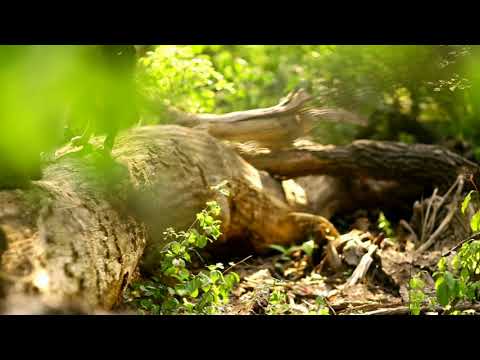
The Letea forest is the northernmost subtropical forest in Europe, formed on the sandy Letea ridge from strips of forest (hasmacuri) developed among the sand dunes. Walking through the forest, you pass through an astonishing change of landscape, from subtropical forest to desert in only 2-300 meters. In the Letea Forest, there are 500 species of plants and over 3000 species of animals, of which more than 2000 are insects, i.e. over 70% of the animal species in the Danube Delta Biosphere Reserve (RBDD), towards the Letea forest being considered by specialists as one of the most interesting natural environments in Romania.
The vegetation consists of the meadow oak (Quercus robur), the brumari oak (Quercus pedunculiflora), the white poplar (Populus alba), the black poplar (Populus nigra), the meadow ash (Fraxinus angustifolia), the marsh ash (Fraxinus pallisiae), the hair (Pyrus pyraster), the white lime (Tilia tomentosa), the elm (Ulmus foliacea) and very rarely the black alder (Alnus glutinosa), completed by a rich undergrowth (Crataegus monogyna, Ligustrum vulgare, Evonymus europaeus, Cornus mas, Cornus sanguinea, Rhamnus frangula, Rhamnus cathartica, Viburnum opulus, Berberis vulgaris, etc.). Besides these, there are also the climbing plants that made these places famous: Periploca graeca, Hedera helix, Vitis silvestris, Humulus lupulus, Clematis vitalba. Other rare species are also found in the vegetal carpet: the sand vole (Convolvulus persicus), the sand vole (Merendera sobolifera) and the horsetail (Ephedra dystachia). The birds are represented by the falcon (Haliaeetus albicilla), the evening falcon (Falco vespertinus), the plover (Upupa epops), the falcon (Coracias garrulus), the plover (Merops apiaster), etc. Some herpetological rarities are part of this fauna: the sand lizard (Eremias arguta) and the steppe viper (Vipera ursinii renardi). Besides all these, the most important are the wild horses and the wild ones. Several hundred wild horses live in the Letea Forest and on the surrounding meadows. There is nothing more spectacular than a herd of wild horses galloping over the sand dunes. In 1930, a part of the Letea Forest was placed under protection, and in 1938 it became a nature reserve.
An exceptional place, with centuries-old trees, lianas, sand dunes and wild horses. The sand is not like the usual sand you find on the beaches in Romania, but a fine, warm, salty sand, without any stones or pieces of shells.
A place where you forget about civilization and where you would like to abandon yourself in the silence of nature.
Letea village
The architecture of the village preserves the local traditional architecture. The houses have blue plaster and fences painted in the same color, the roofs of the houses being made of reeds. The village seems detached from time.
Wherever you go in the village, you feel like you are on the beach. The extremely fine sand, which we see both on the streets of the village and on the dunes of the Letea Forest, comes from marine shells. Most likely, it is brought to the locality from the dunes in the forest, by the strong winds that blow in winter.
Very few people live in Letea, their number being exceeded by the wild horses that enliven the town and attract tourists to the area. In the village, we will serve lunch (optional) at a local, authentic household, where the hosts cook simple traditional fish dishes.
Sulina Beach
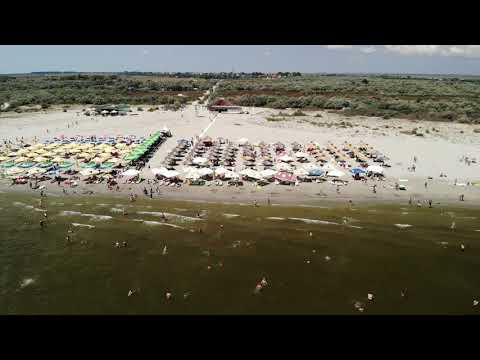
Sulina Beach is a quiet beach with very fine sand. The entrance to the water is smooth, without stones or shells. It is an ideal beach for families with small children or for those who do not know how to swim, because the water is very shallow.
The Observatory Lighthouse was put into operation in 1841, but currently it is not usable. It is located on the left bank of the Danube and is connected to the mainland by a stone pier. The inscriptions of those who participated in its construction are still kept on this pier. Filming was done here for the movie "Toate panzele sus".
The Greek Church of St. Nicholas is located on one of the streets near the Sulina canal and dates back to 1866.
The water tower is still in good working condition today, the exact date of construction not being known. Interestingly, the locals say that during the Second World War, the Germans wanted to blow up the tower, but they only managed to damage the upper part.
The city is located near the confluence of the Sulina branch with the Black Sea, on a narrow sandy river-sea ridge, corresponding to the mouth of the Danube in the Black Sea.
The area of the location of the locality is about 3 km, only in the sense of length, in the direction of the Danube, and the maximum width is 500 m. The old deposits of the foundation are represented by the Paleozoic-Simezoic ones, their thickness being about 85 m compared to about 45 m in the deformation zone of the Delta. Granulometrically, the sand deposits are getting finer towards the surface, which proves that the alluvial power of the river has decreased over the years.
Unlike the rest of the Danube Delta, the surroundings of the city are made up of sandy and salty soils, partially moist, furrowed by canals. In dry and salty areas, the vegetation is specific to the dunes, such as red buckthorn (Tamarix ramosissima). In marshy areas, reeds (genus Phragmites), purpura (genus Typha), mint (Mentha aquatica), water hemlock (Cicuta virosa), hornbeams (Trapa natans) and, more rarely, white water lily (Nymphaea alba) predominate. The area outside the village stands out for the absence of large trees, there is only one grove of acacias (Robini pseudacacia), planted at the entrance to the city. Otherwise, in the city you can find willows (Salix babylonica), poplars, ash trees (Fraxinus excelsior), and cork oaks (Prunus cerasifera), consecrated fruit trees being rarer.
We organize excursions to Letea Forest and Sulina Beach
There are no frequently asked questions for this page yet. Be the first to ask a question!
Do you have a question?
Ask us anything about this page and we will answer as soon as possible.

Turul va dezvalui frumusetea Deltei, unica in lume, gazduind 300 de specii de pasari, precum si 45 de specii de peste de apa dulce în numeroasele lacuri si mlastini.
Details
Padurea Caraorman este una din cele mai nordice paduri subtropicale din Europa. Veti vedea dune de nisip, stejari, arini frasini si liane agatate printre ramuri ce formeaza un hatis greu de strabatut.
Details
Mergi la pescuit in Delta cu un localnic ce iubeste sa impartaseasca frumusetile de vis ale Deltei, sa povesteasca despre capturi si aventuri pescaresti.
Details
Plaja de la Sfantu Gheorge este una dintre puținele plaje sălbatice de la mare de o frumusețe brutală și inconfundabilă. A rămas așa tocmai datorită faptului că face parte din Rezervația Biosferei Delta Dunării și implicit orice fel de construcție este interzisă.
Details
Plaja Perisor este o plaja salbatica, mai putin cunoscuta de catre turisti, unde va puteti petrece, in plina pustietate, cateva ore de relaxare si liniste.
Details
Excursia ta de birdwatching va fi o calatorie linistita si contemplativa, in care vei putea observa pasarile si sa te bucuri de frumusetea naturala a Deltei Dunarii. Aceasta experienta unica te va conecta cu mediul inconjurator si te va umple de admiratie fata de bogatia biodiversitatii acestei zone protejate.
Details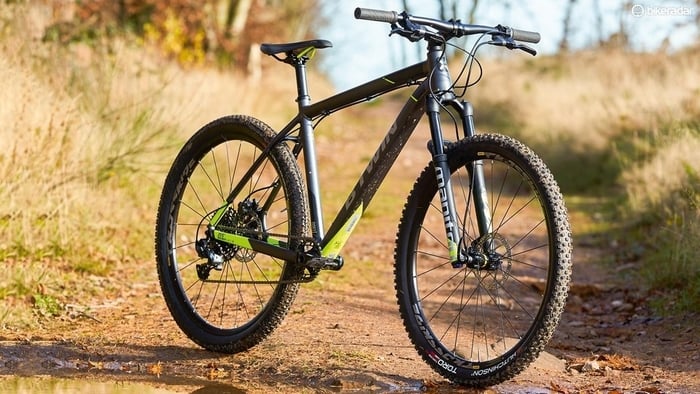
Inchiriaza o bicicleta de munte in Mahmudia si descopera Delta Dunarii pe doua roti! Biciclete pentru adulti si copii, ideale pentru a explora drumurile de pamant si potecile din zona.
Details